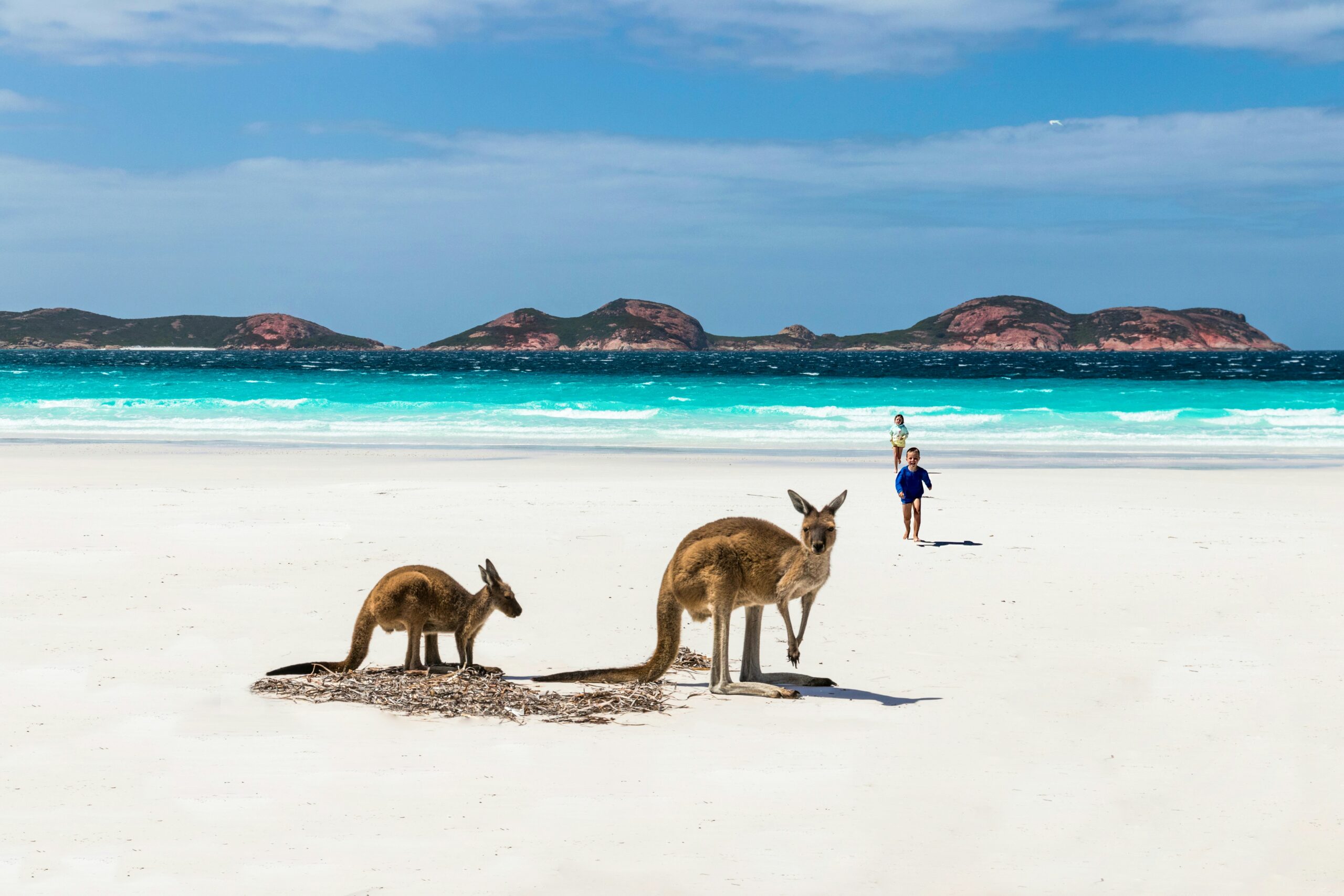
🦘🌿 Kangaroo Island
Just off the coast of South Australia lies Kangaroo Island, a vast natural sanctuary often described as “Australia’s zoo without fences.” It is the country’s third-largest island, stretching about 155 km long, yet it feels like a different world entirely — where wildlife roams freely, beaches remain untouched, and landscapes shift dramatically from rugged cliffs to serene sand dunes.
Kangaroo Island is a place of contrasts and wonders. It invites visitors to slow down, breathe deeply, and reconnect with nature at its purest form. Known by locals simply as “KI,” this island showcases what Australia looked like before large-scale development — wild, raw, and deeply beautiful.
An Island Born of Isolation
Around 10,000 years ago, rising sea levels separated Kangaroo Island from mainland Australia. As humans left (or possibly perished), wildlife evolved without major predators and ecological threats. This isolation preserved species and allowed unique subspecies to develop.
Examples include:
-
Kangaroo Island kangaroos — smaller and darker than mainland kangaroos
-
Tammar wallabies, once nearly extinct elsewhere
-
Glossy black cockatoos — rare and protected by intensive conservation
-
Echidnas and reptiles thriving in the scrublands
Seal colonies bask on rocky shores, while New Zealand fur seals and Australian sea lions form one of the largest remaining populations in the world — playful, curious, and captivating to watch.
Kangaroo Island is considered one of Australia’s most important wildlife refuges.
A Land with a Deep Cultural Story
Indigenous history on the island is fascinating and mysterious. The First Nations Kaurna people lived here thousands of years ago but disappeared long before Europeans arrived. Archaeologists still debate whether they migrated away due to climate changes or other forces.
To the Kaurna, the island was known as Karta Pintingga — “Island of the Dead,” a place connected to the spiritual journey after life. Rock shelters, stone tools, and other cultural artifacts are still found across the island, offering clues to ancient life.
Today, Indigenous groups collaborate with local authorities to preserve cultural heritage and educate visitors about their ancestral ties.
European Discovery and Settlement
In 1802, English explorer Matthew Flinders became the first European to record contact. He marveled at the number of friendly kangaroos, which helped feed his hungry crew — hence the island’s modern name.
Soon after, a mix of sealers, whalers, and runaway convicts settled the island. Their rough, adventurous lifestyle has become part of local folklore.
Over time, settlers transformed the land:
-
Farmland replaced dense bushland
-
Lighthouses guided ships through treacherous waters
-
Communities formed along the coasts, including Kingscote — one of South Australia’s oldest towns
Despite change, the island never lost its wild soul.
Nature’s Masterpieces: Remarkable Rocks & Admirals Arch
🪨 Remarkable Rocks
Perched dramatically atop a granite dome in Flinders Chase National Park, these enormous rock formations were sculpted by:
-
500 million years of wind
-
Salt spray
-
Natural erosion
The result?
-
Curved edges
-
Deep hollows
-
Bright orange lichen patterns
Standing beneath these towering shapes feels like stepping into a surreal sculpture gallery created by nature.
🌊 Admirals Arch
Near Cape du Couedic, this stunning rock arch frames waves crashing below and a colony of sea lions lounging nearby. The arch’s stalactites and the sound of roaring surf create a dramatic atmosphere — a raw meeting of land and sea.
Flinders Chase National Park: Spirit of the Wild
This park covers much of the island’s western side and showcases:
-
Wind-sculpted cliffs
-
Rugged coastlines
-
Bushland full of wildlife
A devastating bushfire in 2019–2020 burned nearly half the island, including much of this park. Yet nature is resilient — green shoots now emerge among charred trees, and conservation programs are helping ecosystems recover.
The fire became a reminder:
Beauty often rises from hardship — just like Australia itself.
Pristine Beaches That Feel Like Paradise
Kangaroo Island’s beaches are some of the most breathtaking in Australia:
🏖 Vivonne Bay — consistently rated among the world’s best beaches
🌊 Stokes Bay — hidden behind rocks, like a secret escape
🦭 Seal Bay — home to sea lion tours along a gorgeous shoreline
🐚 Emu Bay — perfect for calm swimming and coastal walks
Fine white sand, turquoise water, and untouched scenery invite pure relaxation.
An Island of Flavor: Local Food and Produce
Kangaroo Island is known as a gourmet destination thanks to clean air, fertile land, and responsible farming traditions.
Delicious island specialties:
-
Pure honey from Ligurian bees (the world’s last pure population)
-
Fresh seafood — abalone, oysters, crayfish
-
Farmhouse cheeses and dairy products
-
Olive oil and lavender products
-
Local wines with maritime influences
Every meal feels fresh, ethical, and handcrafted with passion.
Wildlife Experiences You’ll Never Forget
Visitors often encounter animals up close in natural habitats:
-
Kangaroos grazing at sunset
-
Koalas sleeping in eucalyptus trees
-
Penguins returning to their burrows
-
Pelicans waiting for feeding time
-
Seals and dolphins playing offshore
Nighttime safaris reveal a new world — full of stars, marsupials, and nocturnal excitement.
Adventure and Nature Activities
Kangaroo Island has something for every explorer:
✔ Quad biking through rugged terrain
✔ Sandboarding at Little Sahara dunes
✔ Hiking along the Kangaroo Island Wilderness Trail
✔ Kayaking and snorkeling with colorful marine life
✔ Birdwatching in peaceful wetlands
✔ Stargazing in dark-sky serenity
Quiet exploration or thrilling adventure — the island offers both.
Why Kangaroo Island Is Famous Worldwide
| Reason | Significance |
|---|---|
| Wildlife sanctuary | Close encounters with animals in the wild |
| Diverse landscapes | Beaches, forests, caves, sand dunes, cliffs |
| Gourmet food culture | Local produce, pure honey, wineries |
| Unique rock formations | Remarkable Rocks & Admirals Arch |
| Conservation | Focus on protecting nature and species |
The island’s motto could easily be:
“Protect what makes us special.”
The Spirit of Kangaroo Island
Kangaroo Island feels like a heartbeat — slow, steady, natural. It shows us:
-
Nature can thrive when humans respect it
-
Isolation can be a gift
-
Beauty can be both peaceful and fierce
Whether you’re sitting quietly on a beach as sea lions play nearby or standing atop wind-battered cliffs feeling the ocean’s roar, the island whispers lessons about resilience, harmony, and wonder.
Travelers often say:
“On Kangaroo Island, you don’t just see Australia — you feel it.”
No responses yet