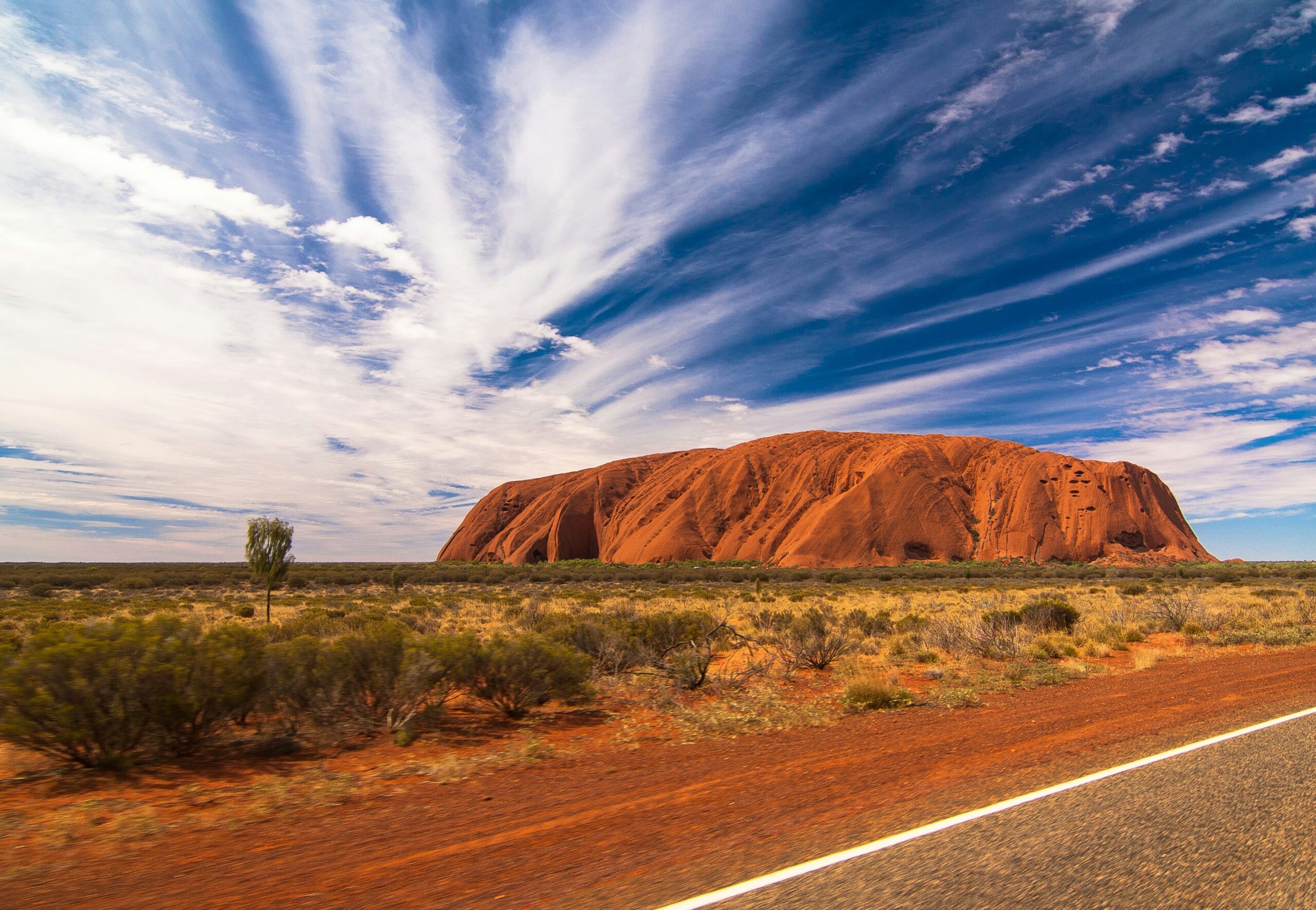
🏜️ Uluru–Kata Tjuta National Park
In the heart of Australia, where the red desert stretches endlessly into the horizon, stands one of the world’s most spiritually powerful and visually striking natural landmarks: Uluru, also known as Ayers Rock. This massive sandstone monolith rises dramatically from the flat desert floor, its rich colors changing with the movement of the sun — glowing fiery red at dawn, shifting through purples and browns, and deepening into a mysterious silhouette at nightfall.
Nearby, a group of ancient rounded rock formations called Kata Tjuta (The Olgas) towers over the landscape like sleeping giants. Together, these two wonders form Uluru–Kata Tjuta National Park, a place deeply rooted in Indigenous culture, environmental significance, and timeless beauty.
A Landscape Older Than Civilization
Uluru is estimated to be:
-
600 million years old
-
Taller than the Eiffel Tower
-
348 meters high above ground, but with most of its mass hidden below the earth — like an iceberg of stone
Kata Tjuta rises even higher:
-
Up to 546 meters tall at Mount Olga
The entire region was formed through:
-
Ancient seas retreating
-
Layers of sandstone compressing over millennia
-
Erosion shaping the smooth yet monumental forms we see today
The desert ecosystem surrounding Uluru and Kata Tjuta is surprisingly full of life:
-
Amphibians hiding in temporary desert waterholes
-
Reptiles basking on warm rocks
-
Desert mammals, including red kangaroos and dingoes
-
250+ species of birds gliding across the endless sky
-
Rare desert plants that bloom after rainfall
Life thrives here because desert life is expertly adapted — resilient, resourceful, and sacred.
A Sacred Heart of Indigenous Australia
Uluru–Kata Tjuta is far more than a natural tourist attraction. It is a living cultural landscape — a place of deep meaning for the Anangu people, the Traditional Owners who have been connected to this land for over 30,000 years, possibly much longer.
The Anangu believe Uluru and Kata Tjuta were formed during Tjukurpa — often translated as “Dreamtime” or the creation period. During Tjukurpa, ancestral spiritual beings shaped the land, established cultural laws, and created the stories that guide Anangu life today.
The land itself is considered a teacher — every cave, waterhole, and marking on the rock carries a story. These stories:
-
Explain how to survive the desert
-
Teach moral and cultural lessons
-
Preserve ancient knowledge
The Anangu name “Uluru” is the correct and traditional name preferred today. “Ayers Rock,” the colonial name, is still recognized but rarely used out of respect.
Shared Stewardship and Cultural Respect
In 1985, a historical moment occurred:
-
The Australian government returned ownership of the park to the Anangu Traditional Owners.
The Anangu then leased the park back to Parks Australia for joint management, ensuring:
-
Indigenous knowledge shapes conservation
-
Cultural restrictions are respected
-
Education supports deeper understanding
Visitors are guided to see more than rock — to see culture, identity, survival, and spirit.
For decades, climbing Uluru was a major tourist activity. However, the climb path crossed sacred areas, causing cultural and environmental harm. After years of requests, the climbing route was officially closed permanently in 2019, symbolizing a major step in reconciliation.
A Place of Color and Light
Uluru has a magical ability to change appearance depending on weather and light:
| Time of Day | Color Appearance |
|---|---|
| Sunrise | Glowing orange and pink |
| Midday | Deep rust red |
| Sunset | Intense fiery red, turning purple |
| Night | Silvery shadow under stars |
This transformation is caused by:
-
Sunlight refraction
-
Iron oxide minerals in the rock’s surface
Kata Tjuta is equally mesmerizing — its domes ripple with shadow and light, especially in the Valley of the Winds.
Legends Written in Stone
Uluru’s surface is covered with:
-
Caves
-
Gorges
-
Waterholes
-
Ancient rock art
Each feature tells a Tjukurpa story about ancestral beings who shaped the land, including:
-
The Mala (hare-wallaby) people
-
Kuniya (the woma python)
-
Liru (the venomous snake)
These stories are still told by Anangu elders — but only certain stories can be shared with visitors. Many others remain sacred.
Kata Tjuta has its own powerful stories, many too sacred to be shared publicly. Visitors understand that much of its significance is hidden — respected through silence.
Visiting the Park: Experiences That Connect You to the Land
Tourists can experience this ancient place in guided, respectful ways:
Top visitor attractions
-
Uluru Base Walk — 10+ km walking track around the rock’s full circumference
-
Mutitjulu Waterhole — sacred water source with rock art
-
Valley of the Winds at Kata Tjuta — unforgettable hiking among giant domes
-
Sunrise and sunset viewing platforms — the rock’s famous color show
-
Cultural Centre — learn Anangu history, language, art, and traditional practices
Experiences are designed to be immersive and educational — not rushed.
A Night Sky Like Nowhere Else
At night, the desert sky reveals:
-
Thousands of glittering stars
-
The Milky Way arching across the horizon
-
Shooting stars cutting through the silence
Without light pollution, the sky becomes an ancient map — the same one the Anangu have used for storytelling and navigation across generations.
Some visitors join astrology tours where guides explain how constellations relate to Indigenous stories. It is a breathtaking journey through time and imagination.
Art Born from the Earth
Aboriginal art from this region is famous worldwide — including:
-
Dot paintings
-
Ceremonial body art
-
Carvings and woven objects
Each piece is a story handed down through generations.
Buying authentic artwork supports:
-
Indigenous artists
-
Local community livelihoods
-
Cultural preservation
Respecting the Land
Because the park is spiritually alive, certain guidelines protect its sanctity:
-
No climbing
-
No entering restricted areas
-
No photography in some sacred locations
-
Stay on marked tracks to avoid damaging fragile habitats
These rules honor the deep connection between the Anangu people and their ancestral land.
Why Uluru–Kata Tjuta Is Famous Worldwide
| Significance | Meaning |
|---|---|
| Indigenous culture | One of the oldest living cultures on Earth |
| Natural wonder | Enormous geological formations and rare beauty |
| Global heritage | UNESCO World Heritage Site |
| Symbol of Australia | A national icon — spiritual and powerful |
| Environmental importance | Fragile desert ecosystem full of life |
Uluru isn’t just looked at; it is felt. It leaves a strong emotional imprint — many travelers say they feel humbled, peaceful, or spiritually grounded.
A Place That Speaks Without Words
Standing before Uluru, visitors often become silent.
The vast desert.
The ancient monolith.
The wind whispering stories older than time.
It reminds us:
-
Humanity is just a small part of a larger story
-
Nature is patient, enduring, wise
-
Sacred places deserve respect and protection
Uluru–Kata Tjuta is a gift — from ancestors, from land, from history.
When we visit, we become part of its story too.
No responses yet